

Table of Contents
- Understanding Your Hitter Type and Swing Style
- Wood Bat Sizing Guide: Length, Weight, and Drop
- Maple vs Ash Wood Baseball Bats: Which Species Fits Your Game
- Wood Bat Weight and Drop: Balancing Power and Control
- Wood Bat Grain and Durability: What to Inspect
- Matching Barrel Size, Profile, and Sweet Spot to Your Swing
- Verifying League Rules and Bat Compliance
- Wood Bat Care, Storage, and Maintenance
- Frequently Asked Questions
Last Updated: October 19, 2026
Understanding Your Hitter Type and Swing Style
Your swing style determines which wood baseball bat performs best in your hands.
Contact hitters prioritize bat control and consistency, making frequent contact and hitting the ball where it's pitched.
Power hitters swing harder and aim for distance, sacrificing some contact rate for raw power. They typically use a heavier, end-loaded bat whose extra weight generates more force on impact.
Most hitters fall somewhere in the middle, with power potential but also a need for control. A well-balanced bat lets you access both approaches.
At Otwbats, we design models for each hitter type. Our Pro Reserve Maple MP7, for example, is built with gap and power hitters in mind.

Consider your actual swing patterns: do you chase fastballs or wait for your pitch, swing through the zone or try to slap the ball? Your answers shape which bat profile fits your game.
Wood Bat Sizing Guide: Length, Weight, and Drop
Choosing the right size is the foundation of bat selection. Too long feels unwieldy; too short limits reach and power. The goal is the sweet spot for your body and strength level.
Selecting Bat Length Based on Height and Age
Bat length ranges from 28 inches to 34 inches for most players. Your height is the starting point, but it's not the only factor.
Stand with your arms at your sides; the bat should reach approximately your hip bone. Younger players and lighter hitters often prefer a slightly shorter bat, while stronger players can handle a longer one.
Age matters more than you might think. A 12-year-old at 5'6" will swing differently than a 16-year-old at the same height. The younger player likely has less upper body strength. A shorter bat helps them generate quicker swing speed.
High school and college players typically use 32-inch to 34-inch bats. Adult players often stick with 33 inches or 34 inches. Professional players use 34 inches most frequently.
The wood bat sizing guide starts with this chart:
Player Height |
Typical Bat Length |
Age Range |
|---|---|---|
Under 5'0" |
28-30 inches |
Youth (8-12) |
5'0" - 5'4" |
30-32 inches |
Youth/Early HS (12-15) |
5'4" - 5'8" |
31-33 inches |
HS (14-18) |
5'8" - 6'0" |
32-34 inches |
HS/College (16+) |
Over 6'0" |
33-34 inches |
College/Adult |
These are starting points, not rules. Your coach and swing style matter more than height alone.
Finding the Right Bat Weight and Swing Weight
Bat weight and swing weight are different measurements. Understanding both changes your selection process.
Bat weight is the actual mass in ounces; a 31-inch bat might weigh 28 or 30 ounces depending on wood and construction.
Swing weight describes how the bat feels during your swing.
Most youth players swing bats in the 24-28 ounce range. High school players typically use 28-31 ounces. College and adult players often swing 31-33 ounces.
The rule of thumb: bat weight should be roughly 1 ounce per inch of length, so a 32-inch bat weighs about 32 ounces. Many players prefer 1-2 ounces lighter for better control.
Lighter bats generate faster swing speed. Heavier bats generate more force on contact. The trade-off is always speed versus power. Find your personal balance point.
Maple vs Ash Wood Baseball Bats: Which Species Fits Your Game
The wood species you choose shapes durability, performance, and feel. Maple and ash are the two most popular options for serious players. Each has distinct characteristics that affect your game.
Maple: Density, Hardness, and Durability
Maple is harder and denser than ash, creating a smaller sweet spot but generating more power when you hit it right. Maple bats also last longer under heavy use.
Maple wood baseball bats are the modern standard for professional and competitive play. They're engineered for maximum durability and performance. The hardness of maple means the bat doesn't compress or dent easily.
The trade-off is feedback: maple transmits more vibration through your hands than ash. Some hitters love the immediate feedback; others find it uncomfortable.
Maple is less forgiving on off-center hits, miss the sweet spot and you feel it. This forces better hitting discipline because poor contact becomes obvious.
At Otwbats, we use hand-split, kiln-dried Reserve grade Maple billets. This process ensures maximum density and the straightest grain possible. Our maple bats are Ink Dot Certified for durability and performance.
Ash: Flexibility, Sweet Spot, and Contact Hitting
Ash is softer and more flexible than maple, creating a larger sweet spot and more forgiveness on off-center contact.
Ash wood baseball bats excel for contact hitters. The larger sweet spot means more hits find the barrel even when your timing is slightly off. This builds confidence at the plate.
Ash generates less vibration on contact because the softer wood absorbs impact energy, feeling smoother in your hands than maple.
The drawback is durability: ash bats don't last as long under heavy use and can develop cracks or splinters after extended play. That rarely matters for casual players, but it's a real concern for competitive players.
Ash also varies more in grain quality, so inspect it carefully. Straight grain means better durability; cross-grain or irregular patterns indicate potential weakness.
Wood Bat Weight and Drop: Balancing Power and Control
Bat drop is a specific measurement that combines length and weight. Drop equals the bat's length in inches minus its weight in ounces.
A 32-inch bat weighing 30 ounces has a drop of negative 2 (written as -2). A 32-inch bat weighing 28 ounces has a drop of -4.
Higher drop numbers (like -10) mean a lighter bat relative to its length. This generates faster swing speed but less power. Lower drop numbers (like -1) mean a heavier bat relative to its length.
Your physical maturity determines the right drop. A 14-year-old shouldn't swing a -1 drop bat; a -5 or -6 is more appropriate until strength and age allow lower drops.
Wood Bat Grain and Durability: What to Inspect
The grain pattern in your bat determines how long it will perform. Straight grain means durability. Irregular grain means potential failure points.
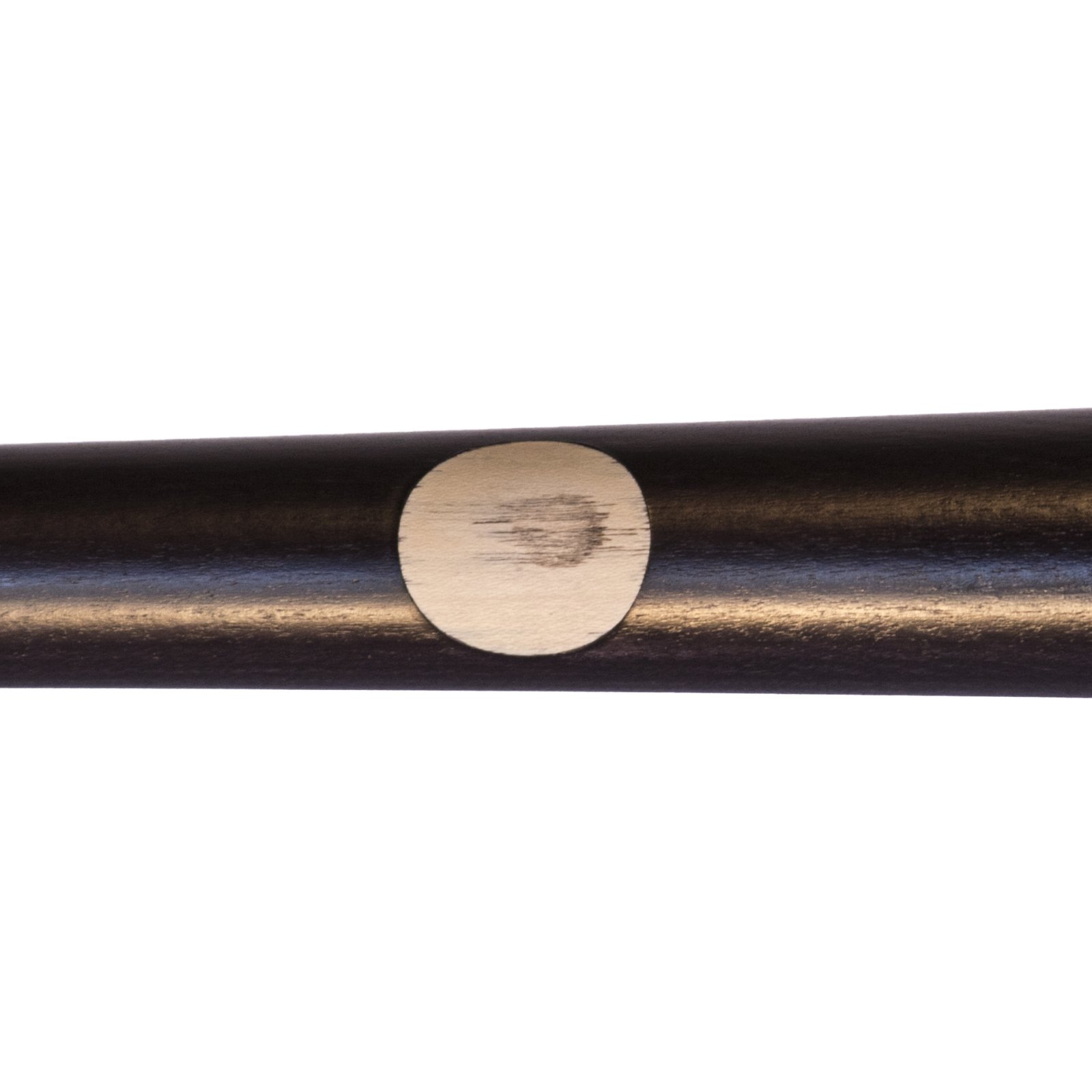
Grain Orientation and Wood Density
Examine the grain before you buy. Run your finger along the bat: straight grain feels smooth, with lines running parallel to the length.
Cross-grain or irregular patterns indicate structural weakness and can develop splinters or cracks during play. Avoid them.
The grain orientation affects where the bat will likely break. Grain running perpendicular to the barrel creates stress points. The bat fails along these weak lines.
Wood density varies even within a species, and denser wood means better performance and durability. Hand-split billets like those used at Otwbats ensure the densest, straightest grain available.
Look for consistent color throughout the bat. Variation in color indicates moisture content differences. These variations create weak spots.
Ink Dot Certification and Quality Standards
Ink Dot Certification is a quality standard for professional-grade wood bats. It means the bat meets strict durability and performance requirements.
The certification process tests wood density, grain quality, and structural integrity. Only bats that pass receive the Ink Dot mark, which appears on the knob.
Ink Dot Certified bats are approved for professional and high-level competitive play. If your league requires certified bats, look for this mark. It guarantees the bat meets established standards.
Not all bats are Ink Dot Certified. Some manufacturers skip this process. Certification costs money, so cheaper bats often skip it. However, certified bats perform better and last longer.
All Otwbats models include Ink Dot Certification as standard. We don't cut corners on quality. For a classic, well-balanced model with optional HVF upgrade, check out the M110 at https://otwbats.com/products/m110.

Matching Barrel Size, Profile, and Sweet Spot to Your Swing
The barrel diameter and profile shape affect how the bat performs. These specifications determine the size and location of your sweet spot.
Barrel diameter ranges from 2.5 inches to 2.75 inches for most wood bats. A larger barrel creates a bigger sweet spot.
The profile describes the bat's shape from handle to barrel. Some bats taper gradually. Others have a more abrupt transition.
End-loaded bats concentrate weight toward the barrel. This generates more power but requires more strength. Balanced bats distribute weight evenly. These are easier to control.
Your swing style determines which profile works best. Power hitters benefit from end-loaded designs. Contact hitters prefer balanced profiles.
The sweet spot is the optimal hitting zone on the barrel. Hitting the sweet spot generates maximum power and minimum vibration.
Larger barrels create larger sweet spots. This makes the bat more forgiving on off-center hits.
Verifying League Rules and Bat Compliance
Before you buy, verify that your bat meets your league's requirements. Different leagues have different rules about bat construction and specifications.
High school baseball follows specific bat standards (NFHS). The bat must meet BBCOR (Batted Ball Coefficient of Restitution) standards for composite bats.
Most high school leagues allow any wood bat. Some leagues specify minimum barrel diameter or maximum drop.
College baseball has separate standards. The NCAA sets requirements for bats used in official games. Wood bats must meet these specifications.
Youth baseball leagues often have their own rules. Some require USSSA certification. Others allow any wood bat. Contact your league directly to confirm.
Professional leagues and independent leagues have additional requirements. Many require Ink Dot Certification. Some specify wood species or construction methods.
The league website or rulebook contains this information. Don't assume your bat is legal without checking.
Wood Bat Care, Storage, and Maintenance
Proper care extends your bat's lifespan and maintains performance. Neglecting maintenance leads to cracks, splinters, and reduced durability.
Store your bat in a cool, dry location.
Never leave your bat in a hot car. The temperature inside a parked vehicle can exceed 150 degrees.
Keep your bat away from direct sunlight.
Clean your bat after use. Wipe it down with a dry cloth. Remove dirt and moisture.
Inspect your bat regularly for cracks or splinters. A small crack can grow larger with continued use.
Store your bat horizontally or vertically. Don't lean it against a wall at an angle.
Never store your bat in direct contact with concrete or cold surfaces.
Apply bat wax or wood conditioner periodically. This maintains the finish and protects the wood.
Choosing the right wood baseball bat requires understanding your hitter type, body measurements, and swing style.
Frequently Asked Questions
What size wood baseball bat should I get?
Bat length depends on your height and age. Youth players typically use 28–30 inch bats, while high school players use 31–34 inches. Start with a bat that reaches your hip when standing, then adjust based on swing speed and control. Test different combinations to find what feels balanced and fast through your swing.
Should I choose maple or ash for my wood bat?
Maple is denser, harder, and more durable, making it ideal for power hitters who want a bat that lasts multiple seasons. Ash is lighter, more flexible, and offers a larger sweet spot, favoring contact hitters and players seeking bat control. Maple delivers more pop from dense grain, while ash forgives off-center hits better. Choose maple for maximum durability and power potential; choose ash if you prioritize contact and a responsive feel.
What does Ink Dot Certified mean for a wood bat?
Ink Dot Certification is a quality standard that confirms a wood bat meets professional durability and performance standards. Certified bats have been tested for grain straightness, wood density, and structural integrity. This certification ensures the bat will perform consistently and last through a competitive season. When shopping for wood bats, Ink Dot Certified models provide verified quality and peace of mind.
How can I tell if a wood bat has good grain?
Inspect the bat for straight, tight grain lines running parallel to the length of the barrel. Avoid bats with grain that curves, spirals, or has wide gaps between rings. Run your hand along the barrel—it should feel smooth with no visible cracks. Hold the bat up to light and look for knots or dark spots, which indicate weak points. Hand-split, kiln-dried billets produce the straightest grains and highest durability.