

Table of Contents
- What Ink Dot Certified Means
- The Wood Bat Ink Dot Test: How It Works
- Maple Bat Grain Structure and Quality Standards
- Wood Bat Durability and Ink Dot Certification
- MLB Requirements and League Regulations
- What to Do When a Bat Lacks an Ink Dot or Fails Inspection
- Choosing Ink Dot Certified Bats for Your Game
- Frequently Asked Questions
Last Updated: October 12, 2026
What Ink Dot Certified Means
Ink dot certified means a wood bat has passed a quality inspection verifying the wood grain runs straight through the barrel. A black ink mark applied to the barrel reveals the grain pattern: straight, tight grain passes; sloped or weak grain fails.
Wood grain directly impacts performance and safety: straight-grain bats are harder, more durable, and less likely to break. The ink dot test is now the standard quality control measure across competitive leagues, from high school through professional play.
Every bat we craft at Otwbats is ink dot certified, so you're getting wood that meets the strictest durability standards and can handle the forces of competitive play.
The Wood Bat Ink Dot Test: How It Works
The wood bat ink dot test evaluates wood grain quality before a bat enters play. Grain orientation determines break resistance: straight grain distributes impact force evenly, while sloped or tangential grain creates weak points where the bat snaps.
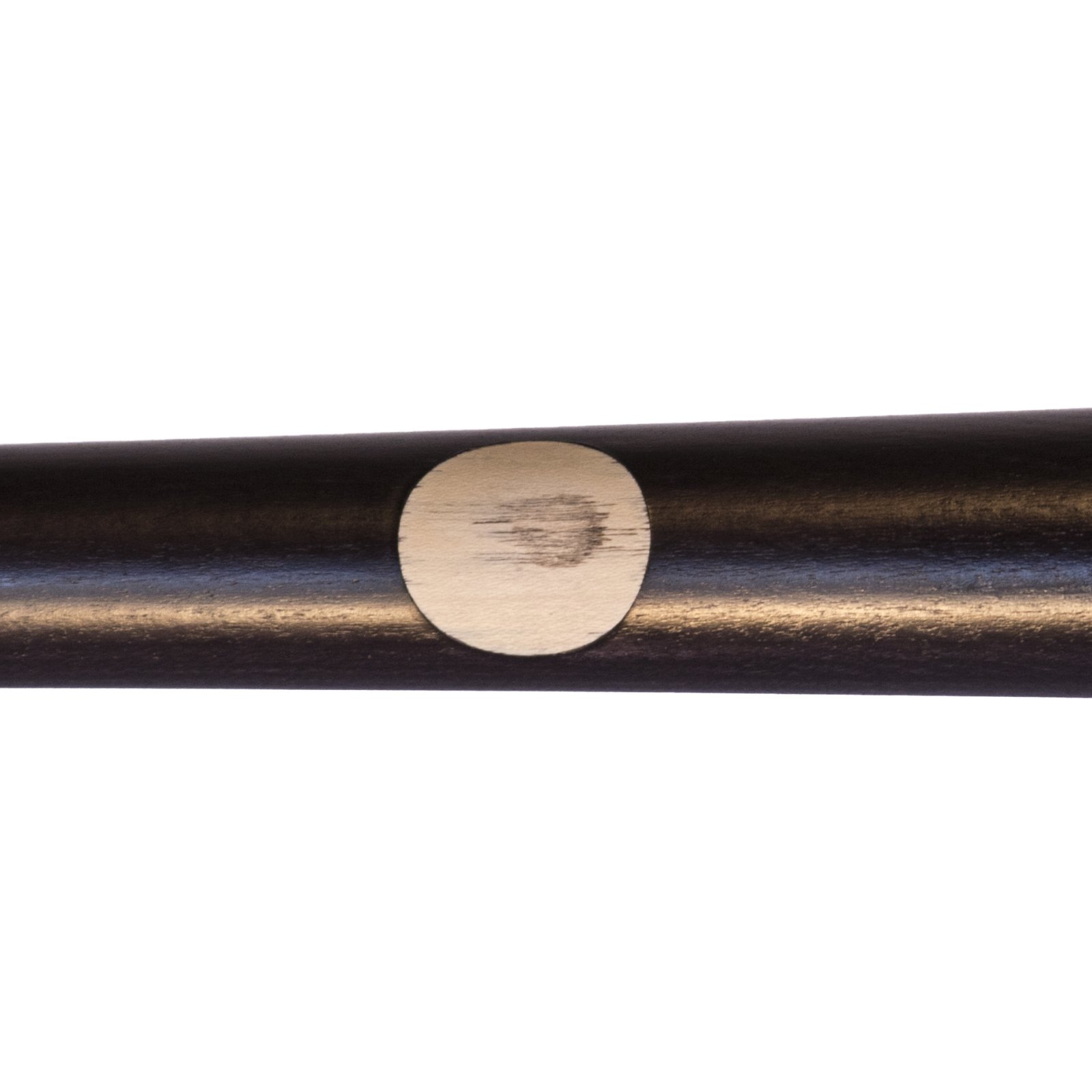
Diagram illustrating the ink dot test process on a wooden baseball bat barrel to verify grain straightness
A black ink dot applied to the barrel surface soaks into the wood and follows the grain, creating visible lines that reveal whether grain runs straight down the barrel or angles across it. This inspection takes seconds but reveals critical information about internal wood quality.
Step-by-Step Testing Process
The testing process is simple enough that league officials and manufacturers can perform it consistently:
- Mark the barrel - A black ink dot is applied to the bat barrel, typically near the hitting zone
- Let the ink soak - The ink penetrates the wood surface for a few seconds
- Wipe away excess - The surface ink is wiped clean, leaving grain lines visible
- Inspect the pattern - Officials examine whether grain lines run straight or slope across the barrel
- Document the result - The bat receives a pass or fail mark based on grain straightness
The process takes under a minute per bat with no special equipment beyond ink and a cloth. That simplicity is why ink dot certification has become standard across competitive leagues.
Pass and Fail Criteria
A bat passes the ink dot test when grain lines run nearly straight down the barrel, parallel to its length. Slight natural variation is acceptable, but the overall pattern must be vertical, with tight, uniform fibers indicating dense timber.
A bat fails when grain lines slope significantly across the barrel or show a tangential pattern, meaning the grain was not oriented correctly during manufacturing.
The standard exists because sloped-grain bats break more frequently, and league safety rules require ink dot certification to reduce breakage and protect defensive players from flying fragments.
Maple Bat Grain Structure and Quality Standards
Maple is the hardest wood commonly used in baseball bats. Its density suits competitive play but makes grain quality critical: straight-grain maple becomes exceptionally hard and durable, while sloped grain leaves weak points that compromise performance.
The ink dot certified standard applies most rigorously to maple because its hardness amplifies the difference between straight and sloped grain: perfect grain can last a full season of heavy use, while poor grain may break within weeks.
Why Grain Straightness Matters
Straight grain means wood fibers run parallel to the bat's length. On contact, impact force travels down those fibers and dissipates evenly through the barrel, so the bat absorbs shock without cracking.
Sloped grain means fibers angle across the barrel, so impact force concentrates at stress points. The bat may survive a few hits, but eventually the concentrated stress exceeds the wood's strength at that angle and it breaks.
Grain straightness determines longevity: perfect grain handles hundreds of swings, poor grain fails after dozens. That's the difference between lasting a full season and breaking mid-tournament.
Birch and Other Wood Species
Birch is softer than maple but still dense enough for competitive play, and lighter for hitters who prefer swing speed over power. It splinters more easily when grain quality is poor, so the ink dot test applies to birch too, ensuring straight grain even without maple-level hardness.
Ash is lighter still and was historically the professional wood of choice, but it breaks more easily than maple or birch, making grain quality even more critical.
The wood bat ink dot test works across all species because the principle is the same: straight grain resists breaking, sloped grain fails. Species sets the baseline durability; grain straightness determines whether that baseline is met.
Wood Bat Durability and Ink Dot Certification
Durability depends on wood density and grain quality. Ink dot certification guarantees the second factor, and combined with proper wood selection like the Reserve grade Maple and Ash we use at Otwbats, it ensures your bat handles a full competitive season.
Bats lacking ink dot certification are unpredictable: they may perform fine for a few games, then break unexpectedly. That unpredictability is why serious players and coaches insist on certified bats.
Care matters too: tee work is gentler than pitched balls, and cold-weather play stresses wood more than indoor cages. But even with perfect care, a non-certified bat with poor grain will eventually fail, while a certified straight-grain bat handles those stresses consistently.
MLB Requirements and League Regulations
MLB's bat rules live in the Official Baseball Rules (Rule 3.02 and related regulations), and the ink dot requirement is tied to the maple standard adopted after a spike in bat breakage in the late 2000s.
That distinction matters when reading a rulebook. A league can require ink dot certification for maple only, for maple and birch, or for all wood bats.
Here is the practical breakdown by level:
- Professional (MLB and affiliated minor leagues): Maple bats must meet the slope-of-grain standard and carry the ink dot. Umpires and club equipment staff can inspect bats before and during games. A bat that fails inspection is removed from play.
- NCAA and most college wood-bat summer leagues: Many follow the MLB-style maple standard, and some extend it to birch. Enforcement is usually handled by the umpire crew or the conference equipment rule.
- NFHS high school play: Bat rules are set at the state association level in most cases, so a wood-bat requirement in one state may not exist in another. Where wood bats are required or allowed, the maple ink dot standard is commonly referenced.
- Adult and recreational wood-bat leagues: Requirements vary widely. Some adopt the MLB standard wholesale, some require only that the bat be a single piece of wood, and some have no grain requirement at all.
Before you buy, confirm two things: whether your league's rule is species-specific or applies to all wood bats, and whether it accepts manufacturer documentation, a visible dot, or both. Some leagues verify through a manufacturer's letter or stamp; others spot-check with their own ink test.
Official Baseball Rules, Rule 3.02 (bat regulations)
What to Do When a Bat Lacks an Ink Dot or Fails Inspection
A missing ink dot is not automatically a problem. It depends on the bat's species, your league, and whether the dot was ever applied.
Step 1: Identify the species. Look at the barrel marking or the manufacturer's label.
Step 2: Confirm what your league actually requires. Read the bat rule in your league handbook, not a summary of it.
Step 3: Inspect the bat yourself. Even without a dot, you can evaluate grain orientation.
Step 4: Decide based on what you find.
- Bat has straight grain, no dot, league requires a dot: Contact the manufacturer or retailer for certification documentation. If they cannot provide it, the bat is not usable in that league.
- Bat has straight grain, no dot, league does not require a dot: Use it. The absence of a dot is not a defect.
- Bat has sloped grain, with or without a dot: Do not use it in league play. Sloped grain is the condition the standard is designed to screen out, and a bat with visibly sloped grain is more likely to fail during play.
- Bat has a dot but the grain around it looks sloped: Treat the dot as suspect. Dots can be applied inconsistently, and a dot on a poorly oriented section does not certify the whole bat. If you have doubts, do not use it in a game that requires certification.
Step 5: If you are buying online, ask the seller for a photo of the ink dot and surrounding grain before you pay.
Step 6: If a bat fails inspection at the field, don't argue with the umpire.
Choosing Ink Dot Certified Bats for Your Game
Start by confirming your league's bat requirements in the handbook or with your coach. Most competitive leagues require ink dot certification; once you know the requirement, you're ready to select a bat.
Look for manufacturers who prioritize grain quality. The best hand-select billets and catch grain problems before finishing.
Consider your hitting style and league level. Maple is harder and more durable, ideal where durability matters most. Birch offers a lighter swing for bat speed. Ash is traditional but needs more careful maintenance due to lower durability.
The Hawk Game Day 3-Pak and Wildcatters Game Day Pak from Otwbats each include three Game Ready Pro Reserve Maple bats that are ink dot certified, built for competitive players who need reliability.
Frequently Asked Questions
What is an ink dot on a wood bat?
An ink dot is a black mark stamped on a wood bat to indicate it passed quality control testing for wood grain straightness and wood fiber alignment. The dot certifies that the bat meets safety and performance standards set by Major League Baseball and other governing bodies. It's a visual guarantee that the bat's internal wood structure is sound and the grain runs straight enough to withstand competitive play without premature breakage.
How does the wood bat ink dot test work?
The ink dot test examines the slope of grain in the bat's barrel. An ink line is drawn along the bat's length, and inspectors measure how far the actual wood grain deviates from that line. If the grain stays within acceptable slope tolerances (typically 3 inches of deviation per 36 inches of length), the bat passes and receives the ink dot certification mark. Bats that fail have grain patterns too irregular to meet safety standards.
Does an ink dot certified bat guarantee it will not break?
No. Ink dot certification guarantees the bat passed grain quality inspection at the time of manufacturing, but it does not eliminate all risk of breakage. Factors like impact force, bat maintenance, temperature exposure, and how the bat is used all affect durability. However, certified bats have significantly lower breakage rates than uncertified wood bats because straight grain is more resistant to stress fractures. The certification is a quality assurance standard, not an unbreakable promise.
Are ink dot certified bats stronger than other wood bats?
Ink dot certified bats are more likely to be durable and perform consistently because they meet strict wood grain standards. Straight grain wood distributes impact force more evenly and resists splitting. However, strength also depends on wood species (maple versus ash), wood density, and manufacturing quality. Reserve-grade maple with straight grain and proper kiln-drying will outperform lower-grade wood regardless of certification. The ink dot confirms quality control; it doesn't replace the importance of premium materials.
Choosing an ink dot certified bat is the first step toward reliable equipment. When you know your bat meets quality standards, you can focus on your swing instead of worrying whether the bat will break mid-season. The certification exists because grain quality directly impacts durability, and durability matters when you're competing at your highest level. Get started with Otwbats and experience bats crafted with the precision and quality control that serious players demand.