

Table of Contents
- Maple vs Ash Wood Baseball Bats: What Actually Changes at the Plate
- Maple vs Ash Baseball Bat Durability: Breakage, Ink Dot, and Longevity
- Maple vs Ash Bat Swing Feel: Flex, Feedback, and the Sweet Spot
- Wood Bat Grain Direction: Why Straight Grain Beats Pretty Grain
- Wood Baseball Bat Turn Models: Matching the Barrel to Your Swing
- Which Wood Fits Your Player Profile? A Selection Framework
- Care, Storage, and Lifespan: Making a Wood Bat Last a Season
- Conclusion: Choosing Between Maple and Ash
- Frequently Asked Questions
Last Updated: October 5, 2026
Maple vs Ash Wood Baseball Bats: What Actually Changes at the Plate
Maple vs ash wood baseball bats comes down to one structural fact: maple is a closed-grain, denser wood that flexes less, while ash is an open-grain, lighter wood that flexes more. At Otwbats, we hand-split and kiln-dry Reserve grade billets of both species, so we see exactly where each one wins.
Below, we break down durability, swing feel, grain direction, and turn models so you can match the wood to your game instead of guessing.
The two woods behave differently because of how they grow. Maple grows with a tight, closed cell structure, which makes it dense and stiff. Ash grows with visible open pores that run the length of the log, which makes it lighter and more flexible.
That single difference drives everything else: weight, feel, sweet spot size, and how the bat fails when it finally breaks.
| Question | Maple | Ash |
|---|---|---|
| Grain | Closed, tight | Open, visible |
| Density | Higher | Lower |
| Flex | Stiff | More flexible |
| Sweet spot | Smaller, concentrated | Larger, more forgiving |
| Best for | Power, compact swings | Contact, gap-to-gap hitters |
Maple vs Ash Baseball Bat Durability: Breakage, Ink Dot, and Longevity
Durability starts with how each species fails. Maple's closed, interlocked grain resists compression and tends to crack cleanly or break into larger pieces when it finally gives out. Ash's open, ring-porous grain flexes more, and that flex is exactly what produces the long splinters ash is known for.
Species is only the starting point. The billet matters more than the label. A hand-split, kiln-dried billet with straight grain on the hitting surface will outlast a cosmetically perfect bat with run-out grain every time.
What the ink dot test actually measures. The ink dot is a slope-of-grain test. A drop of ink is applied to the hitting surface, and the angle of the grain lines relative to the bat's long axis is measured.
How to read durability before you buy:
- Tilt the bat under good light and trace the grain lines from handle to barrel. Lines that run off the edge of the barrel are run-out grain, a break risk.
- On ash, straight grain should run vertically on the hitting surface with lines parallel to the barrel.
- On maple, look for tight, even grain with no visible run-out; maple's grain is subtler, so inspect closely.
- Check the handle for any raised grain or hairline cracks, which signal drying or handling problems.
- Look for the ink dot marking if the bat is sold as certified.
What shortens a bat's life:
- Hitting in cold weather. Wood becomes more brittle as temperatures drop, and breakage risk rises sharply below about 60°F. Save game bats for warm conditions.
- Hitting the ball off the handle or the very end of the barrel repeatedly. Off-center contact concentrates stress where the bat is thinnest.
- Hitting weighted balls or machine pitches with a game bat. These accelerate fatigue.
- Storing in a hot car or damp garage. Moisture swings cause wood to expand and contract, weakening the grain.
No wood bat is unbreakable, and any bat can produce pointed pieces when it fails. Straight grain, proper drying, and regular inspection reduce that risk. Retire a bat at the first sign of a crack, a raised grain line, or a change in sound on contact.
Maple vs Ash Bat Swing Feel: Flex, Feedback, and the Sweet Spot
Maple feels stiffer and delivers a sharp, hard sensation when you square the ball. Ash feels springier, and hitters often describe a trampoline effect on well-struck balls.
The maple sweet spot is smaller and more concentrated. Miss it, and you feel a harsh sting in your hands. That sting is feedback, and for many hitters it teaches better barrel control over time.
Ash has a longer, more forgiving sweet spot. Off-center contact still travels, which is why contact hitters and gap-to-gap hitters tend to prefer it.
Neither feel is objectively superior. A hitter who wants instant feedback should lean maple. A hitter who wants a larger margin for error and a livelier barrel should lean ash.
Wood Bat Grain Direction: Why Straight Grain Beats Pretty Grain
Grain direction matters more than the finish on the bat. On ash, straight grain should run vertically on the hitting surface, with the lines parallel to the barrel.
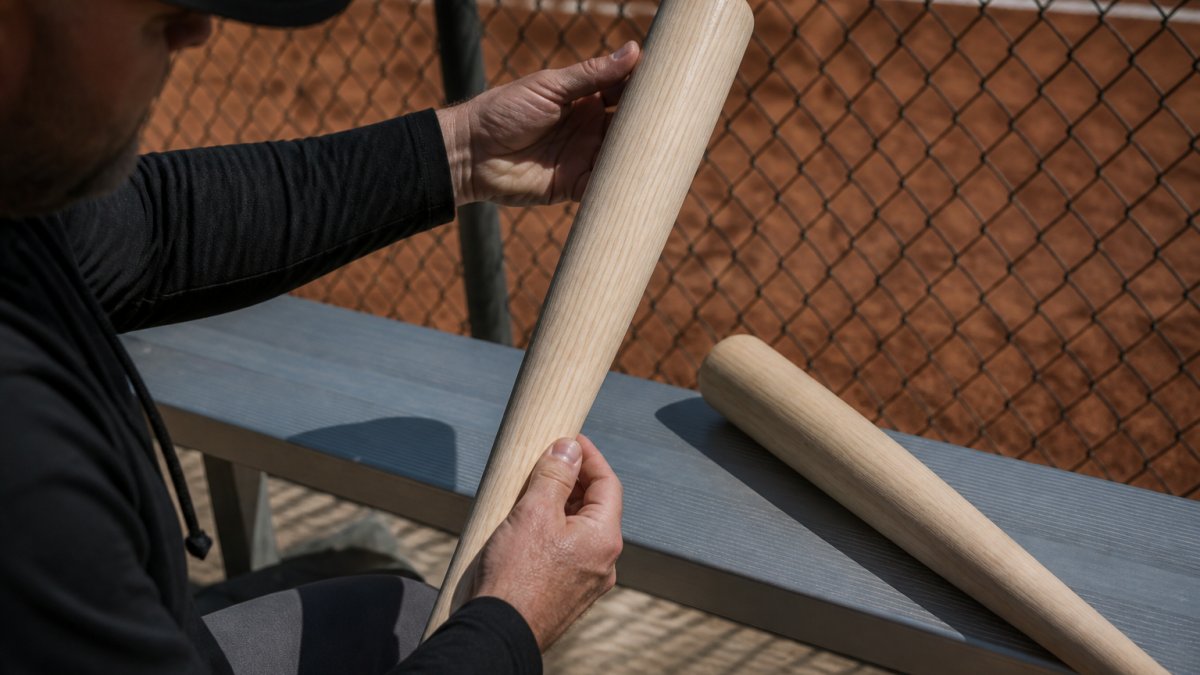
A common mistake is buying a bat because the flame finish looks dramatic. Flame and other finishes can hide grain flaws. Tilt the bat under good light and trace the grain lines from handle to barrel.
If the lines run off the edge of the barrel, that is run-out grain. It weakens the bat and raises breakage risk. Straight grain, even if it looks plain, is the stronger choice.
The official rules on wood bat standards and most league rulebooks require wood bats to meet specific grain and marking standards, so check your league's requirements before you buy.
Wood Baseball Bat Turn Models: Matching the Barrel to Your Swing
Turn models describe the shape of the bat, barrel diameter, taper length, handle thickness, knob shape, and balance point. Two bats turned from the same maple billet can feel completely different if they use different profiles. This is the variable most buyers ignore, and it often matters more than the wood species.
The measurements that define a turn model:
- Barrel diameter. Common barrel diameters run from about 2.44 inches up to the 2.61-inch maximum allowed under the standard wood bat rule. A larger barrel gives a bigger hitting surface but adds weight and shifts mass toward the end.
- Handle diameter. Handles typically run from about 0.90 inches (thin) to about 1.00 inches (thick). A thinner handle lets the hands whip the bat through the zone; a thicker handle gives more surface for the hands and can reduce sting on miss-hits.
- Taper. A long, gradual taper feels more balanced; a short, abrupt taper pushes weight toward the barrel and feels end-loaded.
- Knob. A flared knob protects the bottom hand; a smaller knob lets the hand sit lower on the handle.
How common profiles behave. A balanced profile, a moderate barrel with a gradual taper, keeps weight closer to the hands and suits hitters who want quicker swing speed and more control.
Match the profile to the swing, then pick the wood. A well-fitted turn model in ash will outperform a poorly fitted maple bat for most hitters. The species sets the feel and the failure mode; the turn model sets the balance, the swing weight, and how the bat moves through the zone.
A practical selection sequence:
- Start with length and weight. A bat that is too heavy slows the swing and pushes contact toward the handle.
- Choose a balance point. Balanced for bat speed and control; end-loaded for hitters who can generate their own power.
- Choose a handle thickness. Thin for whip, thick for hand coverage and reduced sting.
- Choose the wood. Maple for a stiff, hard barrel and sharp feedback; ash for a livelier, more forgiving barrel.
At Otwbats, we build custom bats in both species with hand-split, kiln-dried Reserve grade billets, so you can dial in the turn model, weight, and finish to match your swing rather than settling for an off-the-shelf profile.
Which Wood Fits Your Player Profile? A Selection Framework
Use this framework to choose between maple and ash based on how you actually hit.
- Power hitters with compact swings: Maple. The stiff barrel transfers energy efficiently when you square the ball.
- Contact and gap-to-gap hitters: Ash. The larger sweet spot and livelier flex reward line-drive approaches.
- Younger or developing hitters: Ash is often a friendlier first wood bat because it is more forgiving on miss-hits.
- Hitters who want maximum feedback: Maple. The sting on off-center contact teaches barrel control quickly.
- Hitters who want a whippier feel: Ash. The flex adds a springy sensation many hitters prefer.
If you are unsure, start with ash for a season, then move to maple once your barrel control is consistent. Many travel and high school players make that progression.
At Otwbats, we build custom bats in both species with hand-split, kiln-dried Reserve grade billets, so you can dial in the turn model, weight, and finish to match your swing rather than settling for an off-the-shelf profile.
Care, Storage, and Lifespan: Making a Wood Bat Last a Season
A wood bat lasts longer with a few simple habits. Store it in a temperature-controlled space, not a hot car or a damp garage.
Rotate your bats if you own more than one. Using a single bat for every practice and game accelerates wear. Alternating bats spreads the load and extends the life of each one.
Avoid hitting in cold weather with a wood bat. Cold makes wood more brittle, and the risk of breakage rises sharply below about 60°F. Save your game bats for warm conditions and use a practice bat in the cold.
Check the handle and barrel after every session. A small crack or a raised grain line is your warning to retire the bat before it fails mid-swing.
Conclusion: Choosing Between Maple and Ash
The maple vs ash decision is really a decision about your swing, not about which wood is stronger. Maple gives you stiffness, feedback, and a hard barrel for power. Ash gives you flex, a bigger sweet spot, and forgiveness for contact hitters.
Frequently Asked Questions
What is the main difference between maple and ash bats?
Maple is denser and harder, so the ball comes off the barrel with more pop when you square it up. Ash is lighter per inch and more flexible, which gives a springier feel and a slightly larger effective sweet spot. Maple tends to break cleanly on a miss-hit, while ash splinters and can shed pointed pieces. Your swing path and contact pattern decide which trade-off suits you.
Which wood bat is more durable, maple or ash?
Maple holds up better against repeated hard contact because its tighter grain resists compression. Ash survives better on mishits toward the handle because it flexes instead of cracking. Either way, durability depends on grain quality: hand-split, kiln-dried billets with straight, tight grain last far longer than a cosmetically pretty bat with slope of grain. Ink Dot Certified bats give you a visual check on that grain before you buy.
Do maple and ash bats feel different when you swing?
Yes, and the difference shows up most on off-center contact. Ash flexes more through the swing, so a miss toward the end of the barrel stings less and still carries. Maple feels stiffer and transmits more vibration to your hands, but rewards solid contact with a harder, more solid response. Players who hit the ball out front usually prefer maple; players who spray line drives often prefer ash.
What are the different turn models of wood bats?
Turn models describe the barrel diameter, taper, and handle thickness. Common profiles include a thin-handled, large-barrel model built for bat speed, a medium-barrel model with a balanced feel, and a thick-handled model with a smaller barrel for contact hitters who want durability near the hands. Test a couple of profiles in batting practice before committing, because the turn model changes feel as much as the wood species does.
Most hitters do not need to guess. At Otwbats, we build custom wood bats from hand-split, kiln-dried Reserve grade Maple and Ash billets, with our High Velocity Finish and Ink Dot Certified quality for durability you can trust. Choose your species, dial in your turn model, and add custom colors that reflect your game. Get started with Otwbats and swing a bat built for the way you actually hit.